




Close


Every component of an Akrapovič exhaust is carefully designed and constructed by a highly skilled multidisciplinary team of industrial designers and engineers; they meet challenges every day, combining a technical solution with an attractive, modern, and state-of-the-art design and taking it to the next level.
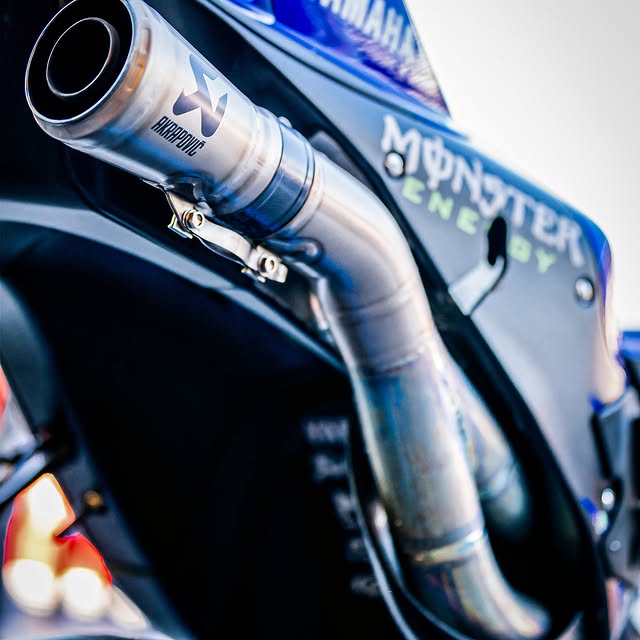
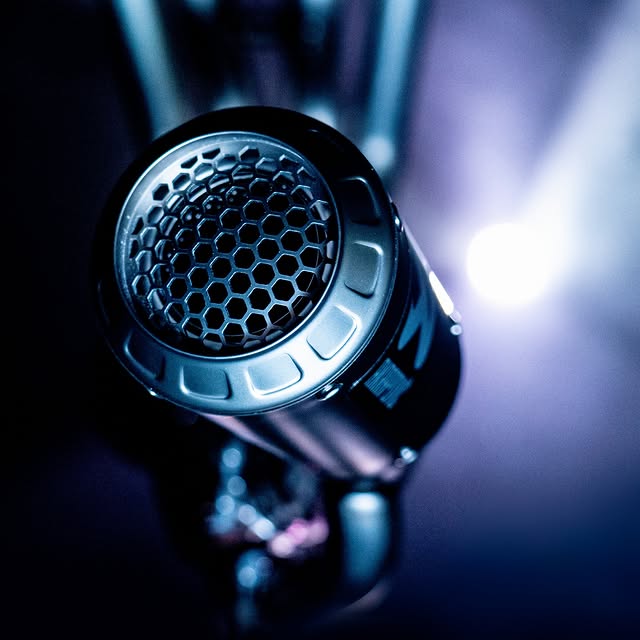
Our signature hexagonal muffler took the world by storm when it was introduced to the motorcycle market in 2005. A new conical muffler represented a new level of evolution; it provides a sharper racing sound and faster acceleration. In recent years, new designs of our exhaust systems and composite parts have been developed with new innovative shapes and effects. More is yet to come – stay tuned!

Boundaries in the design world can be broken, leading to many impressive and prestigious honours for the ground-breaking exhausts the company has produced − including Red Dot product design awards. The first Red Dot Award for Akrapovič was the Red Dot: Best of the Best award in the Product Design category for the Akrapovič Evolution Line (Titanium) for the Ducati 1199 Panigale in 2014, with others following every year. Akrapovič has received true recognition of all it has accomplished. Awards are an important recognition of Akrapovič’s dedication to setting and achieving high design standards.

The development process starts in a 3D CAD/CAM environment with a 3D scan of the reference car’s underbody. Using CAE simulations combined with measurements, Akrapovič exhaust systems are evaluated and optimized for structural rigidity, fatigue, and thermal loads.
The best prototype configuration is developed and evaluated on a chassis dyno, measuring torque, power, temperatures, and backpressure.

Akrapovič shows an attention to detail for the highest grade of base materials that is second to none in the premier exhaust category. Its fully equipped metallurgical laboratory for metallography assessment is a necessary tool for evaluating the properties and quality of products and for gauging the end results. Through the use of over 35 years of in-house knowledge and technologies in handling special materials for exhaust systems, such as titanium, stainless steel, and aluminium alloys, Akrapovič devotes meticulous care to chemical compositions and gas content, which is crucial for the quality of cast titanium parts. Hardness and micro-hardness measurements, tensile properties, plastic properties, and formability determinations are carried out for all incoming and new materials. Such regular procedures ensure the highest quality of the final product and the use of the best materials.
Akrapovič exhaust systems are crafted from proprietary titanium alloys. These are three times stronger than “commercial pure” alloys at elevated temperatures. Their high quality and strength make them more difficult to form than common alloys, but they ensure products that are substantially more durable and dimensionally more stable, and have significantly increased heat resistance. Titanium is 40% lighter than stainless steel; as such, it helps improve performance and handling.
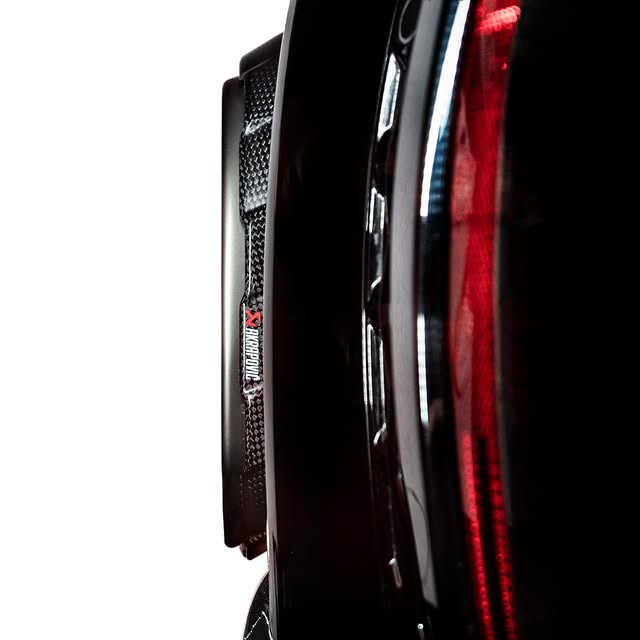
Akrapovič carbon-fibre components are produced in-house with temperature-resistant carbon-fibre composites. Through innovative production techniques, the company can produce parts with very complex shapes in various sizes. These handcrafted high-quality components are used as parts of exhaust systems such as carbon-fibre muffler outer sleeves and heatshields on motorcycles, and the appearance of a car can be further personalized with handcrafted carbon-fibre rear diffusers and carbon-fibre tailpipes. There are many benefits of using a composite material like carbon-fibre; it weighs as little as an eighth of stainless steel, and its tensile strength can be eighty times greater per unit weight compared to steel.
Austenitic stainless steel is renowned for its good corrosion resistance, improved high-temperature properties, and enhanced formability. For steel exhaust parts, only high-grade austenitic stainless steels are used to manufacture our exhaust systems.
The family of nickel-based super alloys that are alloyed with chrome, molybdenum, and niobium are also commercially known as Inconel alloys. These kinds of alloys have exceptional mechanical properties at extremely low and high temperatures. They are also extremely resistant to corrosion and corrosive acids (both surface resistance and at the crystal level) and have very high oxidation resistance (they can be used at temperatures up to 1,000 °C). Due to their excellent mechanical properties, they can be half as thick as stainless steel for use at elevated temperatures.

All major material properties are checked and evaluated in our material testing laboratory, which directly supports foundry, production, and R&D activities. Regular monitoring and ongoing evaluations and testing of standardized and new advanced materials, semifinished products, and final products during the production process ensure the highest quality standards for the end products. The purpose of the testing is to understand material behaviour and its limits to improve the long-term sustainability of final products.
The chemical compositions of titanium, stainless steel, and aluminium alloys are controlled. Controlling gas content in titanium castings is crucial for the quality of cast parts.
Hardness and micro-hardness measurements, tensile properties, plastic properties, and formability determinations are performed regularly for all incoming and new materials, and so the quality and use of the most appropriate materials in various applications and products are guaranteed.
Complete metallographic sample preparation for microstructure evaluations and weld quality determination ensures better understanding of the materials and helps to better control technology processes and parameters such as welding, bending, forming, and casting.
In the Akrapovič measuring laboratory, prototype, exhaust system, and cast part measurements are carried out with a Zeiss Contura measuring machine, a GOM Atos Triplescan III scanning camera, a Romer Sigma measuring arm, and other ultra-precision measuring equipment.
Measurements on motorcycles and cars are performed with the Romer mobile measuring arm and GOM Atos Triplescan III scanning camera.
For the most accurate 3D measurements, Zeiss Contura G2 CMM and Spectrum CMM coordinate measuring machines are used.
Atos optical systems are used for measuring, quality control, and especially reverse engineering; these systems allow the digitalization of even the most complex shapes in an exceptionally short time. The systems offer a very clear comparison between a mathematical model and the product measurements.

An exhaust system is like a musical instrument, converting rough pressure pulsations from combustion to sound, which defines the overall character and appearance of the vehicle. Akrapovič is taking the sound of the exhaust system to the next level, while a team of NVH (noise, vibration, and harshness) engineers carefully tune every tube, muffler, and tailpipe to a specific vehicle. Prototypes are designed with attention to detail to extract the best-possible sound potential. Every prototype is measured with state-of-the-art measuring equipment, which measures the sound of the vehicle’s interior and exterior.
In addition to sound, many other vehicle parameters, such as vehicle speed, rpm, exhaust gas temperatures, and vibrations, are measured and correlated with the measured sound. Data are processed in the frequency domain and converted to 3D graphs, also known as colour maps. Every colour map represents an exhaust system’s sound signature, its identity card, where the sound level is presented in dependence on frequency and rpm.
The team of engineers spends countless days searching for the perfect balance of sound, navigating between sporty and comfortable, refined and rough, and quiet and loud. Prototypes are constantly being improved through on-road tests, dyno testing, acoustic transmission loss, flow testing, and simulations until the required sound perfection is achieved. The sound itself is ultimately still in the domain of the engineers’ subjective judgement, but is supported by objective sound engineering data. Every step in the creation of an exhaust system, from development to production, is careful planned – to the last detail and to the last millimetre.

Durability of an exhaust system is very important for Akrapovič, and therefore a new motorcycle durability dyno was introduced in 2018. This fully autonomous system using a driving robot is programmed to run the exact duty cycle and accumulate mileage.
Furthermore, our newly developed products are tested on the most challenging racetracks around the world in partnership with dozens of top-notch racing teams.

Great ideas need to be brought to fruition in a great and state-of-the-art product. Various technologies in the production process makes this possible. It is a synthesis of expertise from various engineering spheres such as tube making, bending, cold forming and deep drawing, stamping, cutting, welding, assembly processing, modern CNC machining, quality inspection, and many others. Of course, the basis for everything is proper tooling – it is the key to success. The company boasts an in-house tooling design and tooling workshop, and so it is able to design and produce unique tools and jigs. Furthermore, Akrapovič has over two decades of experience using titanium alloys for exhaust system applications.
In the constant search for the latest technology solutions, many advanced processes have been introduced to Akrapovič production: the hydroforming process for tube forming, using a medium based on water emulsion with lubricant additives, is just one of many. The introduction of this technology allows the complete realization of technological ideas that are developed by Akrapovič R&D. One such idea is the patented D-type header tubes, which until now have been manufactured through other production processes.

The Akrapovič titanium foundry, which was established in 2009, has added value in fields such as cutting-edge surgical instruments, precision technology in the meat-processing industry, high-end sporting goods and apparel, the packaging industry, and numerous parts in the car and motorbike markets.


Every component of an Akrapovič exhaust is carefully designed and constructed by a highly skilled multidisciplinary team of industrial designers and engineers; they meet challenges every day, combining a technical solution with an attractive, modern, and state-of-the-art design and taking it to the next level.
Our signature hexagonal muffler took the world by storm when it was introduced to the motorcycle market in 2005. A new conical muffler represented a new level of evolution; it provides a sharper racing sound and faster acceleration. In recent years, new designs of our exhaust systems and composite parts have been developed with new innovative shapes and effects. More is yet to come – stay tuned!
Boundaries in the design world can be broken, leading to many impressive and prestigious honours for the ground-breaking exhausts the company has produced − including Red Dot product design awards. The first Red Dot Award for Akrapovič was the Red Dot: Best of the Best award in the Product Design category for the Akrapovič Evolution Line (Titanium) for the Ducati 1199 Panigale in 2014, with others following every year. Akrapovič has received true recognition of all it has accomplished. Awards are an important recognition of Akrapovič’s dedication to setting and achieving high design standards.
The development process starts in a 3D CAD/CAM environment with a 3D scan of the reference car’s underbody. Using CAE simulations combined with measurements, Akrapovič exhaust systems are evaluated and optimized for structural rigidity, fatigue, and thermal loads.
All major material properties are checked and evaluated in our material testing laboratory, which directly supports foundry, production, and R&D activities. Regular monitoring and ongoing evaluations and testing of standardized and new advanced materials, semifinished products, and final products during the production process ensure the highest quality standards for the end products. The purpose of the testing is to understand material behaviour and its limits to improve the long-term sustainability of final products.
The chemical compositions of titanium, stainless steel, and aluminium alloys are controlled. Controlling gas content in titanium castings is crucial for the quality of cast parts.
Hardness and micro-hardness measurements, tensile properties, plastic properties, and formability determinations are performed regularly for all incoming and new materials, and so the quality and use of the most appropriate materials in various applications and products are guaranteed.
Complete metallographic sample preparation for microstructure evaluations and weld quality determination ensures better understanding of the materials and helps to better control technology processes and parameters such as welding, bending, forming, and casting.
In the Akrapovič measuring laboratory, prototype, exhaust system, and cast part measurements are carried out with a Zeiss Contura measuring machine, a GOM Atos Triplescan III scanning camera, a Romer Sigma measuring arm, and other ultra-precision measuring equipment.
Measurements on motorcycles and cars are performed with the Romer mobile measuring arm and GOM Atos Triplescan III scanning camera.
For the most accurate 3D measurements, Zeiss Contura G2 CMM and Spectrum CMM coordinate measuring machines are used.
Atos optical systems are used for measuring, quality control, and especially reverse engineering; these systems allow the digitalization of even the most complex shapes in an exceptionally short time. The systems offer a very clear comparison between a mathematical model and the product measurements.
An exhaust system is like a musical instrument, converting rough pressure pulsations from combustion to sound, which defines the overall character and appearance of the vehicle. Akrapovič is taking the sound of the exhaust system to the next level, while a team of NVH (noise, vibration, and harshness) engineers carefully tune every tube, muffler, and tailpipe to a specific vehicle. Prototypes are designed with attention to detail to extract the best-possible sound potential. Every prototype is measured with state-of-the-art measuring equipment, which measures the sound of the vehicle’s interior and exterior.
In addition to sound, many other vehicle parameters, such as vehicle speed, rpm, exhaust gas temperatures, and vibrations, are measured and correlated with the measured sound. Data are processed in the frequency domain and converted to 3D graphs, also known as colour maps. Every colour map represents an exhaust system’s sound signature, its identity card, where the sound level is presented in dependence on frequency and rpm.
The team of engineers spends countless days searching for the perfect balance of sound, navigating between sporty and comfortable, refined and rough, and quiet and loud. Prototypes are constantly being improved through on-road tests, dyno testing, acoustic transmission loss, flow testing, and simulations until the required sound perfection is achieved. The sound itself is ultimately still in the domain of the engineers’ subjective judgement, but is supported by objective sound engineering data. Every step in the creation of an exhaust system, from development to production, is careful planned – to the last detail and to the last millimetre.

Durability of an exhaust system is very important for Akrapovič, and therefore a new motorcycle durability dyno was introduced in 2018. This fully autonomous system using a driving robot is programmed to run the exact duty cycle and accumulate mileage.
Furthermore, our newly developed products are tested on the most challenging racetracks around the world in partnership with dozens of top-notch racing teams.
Great ideas need to be brought to fruition in a great and state-of-the-art product. Various technologies in the production process makes this possible. It is a synthesis of expertise from various engineering spheres such as tube making, bending, cold forming and deep drawing, stamping, cutting, welding, assembly processing, modern CNC machining, quality inspection, and many others. Of course, the basis for everything is proper tooling – it is the key to success. The company boasts an in-house tooling design and tooling workshop, and so it is able to design and produce unique tools and jigs. Furthermore, Akrapovič has over two decades of experience using titanium alloys for exhaust system applications.
In the constant search for the latest technology solutions, many advanced processes have been introduced to Akrapovič production: the hydroforming process for tube forming, using a medium based on water emulsion with lubricant additives, is just one of many. The introduction of this technology allows the complete realization of technological ideas that are developed by Akrapovič R&D. One such idea is the patented D-type header tubes, which until now have been manufactured through other production processes.
The Akrapovič titanium foundry, which was established in 2009, has added value in fields such as cutting-edge surgical instruments, precision technology in the meat-processing industry, high-end sporting goods and apparel, the packaging industry, and numerous parts in the car and motorbike markets.
 Back
Back

SELECT MOTORCYCLE BRAND


